Tuesday, November 3, 2015

Why I'm not a fan of NaNoWriMo (And how YOU can succeed at it)

I'll be honest, there's no national novel writing month for me, mainly because I write everyday unless I have a reason not to, which even this is suspect because what excuses can you make NOT to do a job you love? Even so, every November comes the flood of posts, the good intentions, and the massive cottage industry that seeks to exploit those who take part. I could gripe about this for an entire blogpost, but instead of griping, I should be helping. So let me state some things clearly before I begin.

NaNoWriMo in itself is not a problem. The idea that you dedicate yourself to writing 50,000 words over the month of November is a great goal, even though it is often presented in an incredibly obtuse manner that doesn't really help those who try, especially those who have never done it before.

Here's why I say that: I have written, to date, seventeen different novels, having only completed six of them, and having only sold one that didn't even make it to print at a very tiny press. I started writing in earnest when I was 19, and the average time it takes me to really put out a novel-length manuscript that I'm willing to put my name on is six months to a year--and that is only on the rough draft. The drafts that follow it will take as long as they need to take. Some have taken six weeks. Others, three years. Part of this is because I try to work on three to five different manuscripts at once, but that's me, and I'm getting help for it!

Novel writing is not easy in any sense of the word, so the idea that someone like me, who has sold stories and written novel-length manuscripts before, looks at NaNoWriMo with a bit of trepidation should be telling. But I've seen how the sausage is made, which also means I can imagine someone else sitting down, never written anything ever before, and seeing something else that is completely different--and I don't want to downplay that. I know people put a lot of love into their work this month, and that should be celebrated. But remember:

The only pat on the back you deserve is the one you get when you sign that publishing contract and sell that work.

With that said, I could be a fan of NaNoWriMo and its output if it was presented in a realistic, meaningful way that helps instead of pressures. There is a way of doing this that helps new writers learn the craft, helps experienced writers edit their work, and helps those who are already prepared to create the manuscript they will one day send out to publishers/agents/alpha-beta readers. This will be my attempt to provide that path with these five tips for making NaNoWriMo work.

Jay's Five Tips for succeeding at NaNoWriMo

1. Outline


There are two concrete ways of going about writing your manuscript, though you can usually play between them. The first is "Pantsing", where you essentially write your story as it comes to you, with no planning whatsoever, until you reach THE END. That works for some people, and for short stories, it is usually a doable model. 50,000 words, however, is a completely different beast. A lot can happen in those words, so it often important to "Outline", and thankfully there are a lot of great outlines and methodologies available on the internet to help get you started. At the very least, you should know four things:

A) Your Beginning - Where does your story start? (Characters, setting, problem, plot)

B) Your Middle - Where are we when the reader hits your story at its dead center? (Character growth, resetting the board, new problems, fresh solutions)

C) Your End - Where does the story end? (Resolution, Growth achievement, Landing, Seeding the next book if there is one...)

D) Your Climax - What is the big thing that happens before THE END that ties it all together?

Knowing these four points, at the very least, gives you a road map where to go, even if you are pantsing it. Knowing where you are going gives you time to formulate how your scenes will play out, how you will sequence events, characters arcs, etc. This leads us to...

2. Word count


Let's do the math: 50,000 words/30 days in November equals 1,666 words a day. For new writers, that can be daunting, but the fact that you're attempting NaNoWriMo is daunting in the first place. With those considerations, I would suggest that everyone employ Stephen King's Word Count "rule" that he enumerates better than I will within his memoir, On Writing.

Hit 2,000 words a day.

Yes. That many. By shooting for that number, you can realistically hit the magic 50,000 words, even if you have to miss a few days, which you will, because...

3. Hitting 50,000 words is not the point. Getting writing done is.


I see every year people lament and complain that they didn't hit 50,000 words for the month, but if 50,000 is the point of this month in the first place, stop. Word counts don't equal publishing contracts, and neither does bitching about the fact that you couldn't hit some arbitrary number that nobody is ever going to get mad at you over for not hitting. Things WILL get in the way that may cause you to not reach 50,000 words--work, school, kids, drugs, the apocalypse, John Hartness--anything and everything can and will stop you.

And that's fine!

Great writing is not made on an assembly line or on schedule. Great writing is made through dedication, time, work, destroying your own ego for the sake of your story, and revising again and again and again until the manuscript is sold. NaNoWriMo is the opportunity to get started, because there is often one thing that people forget: there are not a lot of traditional or small press publishers out there that are taking 50k manuscripts who are going to get you into a bookstore. And that shouldn't be your goal this month. The real goal is much more simple.

4. Focus on writing a great rough draft.


Depending on the genre your write in and the path to publishing you want to take, having 50,000 words at the end of November may only get you so far. In some genres, it won't get you anywhere. Now, if you are self-publishing your NaNo project, none of this really applies to you, and I wish you nothing but the best. However, if I was a publisher or an agent and I received a query letter that said "this is the manuscript I wrote for NaNoWriMo, and I am submitting it to you" and that query letter is dated on December 1st, good bloody luck!

Take this time to write the best story you can. NaNoWriMo should be about the process, not just the completion, and if you are writing in a genre that often requires more than 50,000 words for acceptance, you owe to yourself to give you a break from any sort of pressure that writers who partake in this month usually put themselves under. There has only ever been one author that I have known who set out to write a complete novel during NaNoWriMo, and he's a North Carolina Laureate. I'm guessing those reading this are not him, and neither am I, so why pressure yourself into doing something that results in work that is not your best?

The words will show you how important it is to just to take your time. Make this the best rough draft you can.

5. Commit


Here's where the real pressure is: 1,666 to 2,000 words. For some, that is a steep mountain to climb every day, while for others, it is a walk in the park. Speaking for myself, I usually hit an average of 1700-2000, but that took YEARS to get to. Just like climbing a real mountain, you have to train for it.

Allow me to repeat myself: you don't have to hit 50,000 words by November 30th.

You do, however, have to sit down and write everyday. You will lose sleep. You won't be able to go out for drinks with your friends. You might not be able to watch your favorite show on Wednesday night. That's because your butt needs to be in a chair, in front of whatever you use to write on.

Set goals on word counts. Follow your outlines. And remember--this isn't about the word count, it is about the creative process of writing. Enjoy what you are doing. That is what this month should be about: enjoying the process of writing fiction and getting it done.


Now go to work, stay safe, and if you have any gripes with what I have said here, I'd be happy to hear from you in the comments below. Bye now!

Wednesday, April 23, 2014

Romance and Agency

One of the big "debates" in Science Fiction and Fantasy right now is the question of women and the role they play in the genres we all love. Some have erroneously gone out and proclaimed that women authors are "killing" genres, which is kind of bullshit when you consider the fact that it would mean that Ursula K. Le Guin, Mary Shelley, Patricia McKillip, Karen Lord, K.V. Johansen, and an outstanding mix of old and new women authors have done so much to keep the money flowing into publisher's pockets, which keeps the genre going. There really aren't "male authors" or "female authors." Just great authors.

Mary only invented Science Fiction and Horror. But what does she really know?

And before anyone asks: I am not a feminist due to the fact I am  a humanist, simply because I think humanism encompasses all the things that feminism wants without all the political bullshit and gender-divisive language. I am a big fan of Judith Butler and Naomi Wolf though, so I do understand and support the goals and aims of the movement, as long as it is is for true equality and the realization of human dignity outside of gender, race, creed, and whatever else.

Seriously, cut that intolerant shit out.

But enough of that! Politics always sours a good table of friends.

What I wanted to talk about this time revolves around is the question of "Romantic Interests," because one thing that women readers and women writers often bring up is how female characters are relegated to being love interests. And it's true, speaking from person experience. Nine out of ten books I read within fantasy feature women who are treated as some sort of prize to be won by the hero.

So let's get some things out of the way. Nobody should be a "prize." When you get turned into an object instead of a person (which I think defines "objectification"), there is something being taken away from that person, which adds the nasty quality of "subjectification." What is being taken away is their right to be something unto themselves.

But is having a love interests a bad thing then? It depends.

At the crux of this argument I am about to make is that it all comes down to Agency.

What is Agency? It is not just something important for female characters, but for male characters, gay characters, black, brown, white, red, and green characters too. Agency is the ability for characters to act independently and make their own free choices.

Let's look a pair of examples of characters with agency and another pair without agency before we talk about its implications of how this fits into writing a relationship between two romantic leads, because the implications are where things might get contentious.

Please understand, everything below is my opinion alone.

Characters with Agency

Example #1

All rights go to CinemaBlend for the image.

Jen Yu from Crouching Tiger, Hidden Dragon is  one my favorite characters from one of the best (yet still universally underrated) films in international cinema. Played masterfully by Zhang Ziyi, she is a character that is all about her agency. Instead of being the kind of mewing princess that dreams of holding a sword and going off on adventures, she actually goes and does it throughout the entire movie without having to rely on someone else to do it for her or show her the way. From her choice to study Wudang in secret to deciding that her arranged marriage isn't for her, her willingness to give up her easy life for more than just love alone throughout the story demonstrates for the viewer quite clearly that she is a master of herself and her fate. That is agency in a nutshell. It isn't just that she decides to be a "kick-ass female," it is that she decides on her own to be a kick-ass female.

Example #2

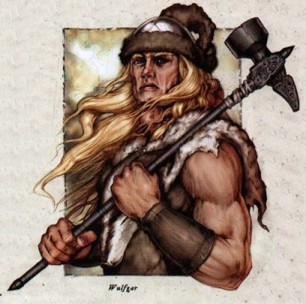
All rights to R.A. Salvatore and The Forgotten Realms

One of my absolute favorite characters from the menagerie of R.A. Salvatore's Drizzt novels, Wulfgar of Icewind Dale was more than the average Thor/Conan stand-in that often overburdened any D&D property. Salvatore's books have been a high mark for a company that often executes before it really thinks. While all of Salvatore's characters get their time to shine throughout the twenty-plus book series, Wulfgar stands out to me as a realistic depiction to the torments of being a real hero. Raised by a dwarf-king and trained by a dark elf, Wulfgar has both the ability see outside of his native people's worldview, and at the same time, form it in a way that it fits within his as well. From deciding not to marry "the girl" and marrying the one he actually loved to giving up his rightfully-earned crown as King of Settlestone, he forged his own path based on what he felt and needed, not what others expected of him because of the typical tropes that usually come with this type of character. He took actual responsibility for the consequences of his actions. This is a marked difference from other warriors I often see in the genre, who are either drones for a higher power or people that just want to work within the system they operate in with little thought to why they do it. Having agency means having the ability to go outside the accepted notions of how people think "the story should go", and Wulfgar does that.

Now, let's look at

Characters *without* Agency

Example #1

Robin Hood: Prince of Thieves (1991)

Please note, I am not picking on the character of Maid Marian herself, as there are a lot of great examples of her being a character with agency; in fact, Cate Blanchett playing the role is a perfect example of a character that could have topped the previous section. However, Maid Marian in Prince of Thieves is a pro-typical damsel in distress that feminists like Anita Sarkeesian point to when they talk about this kind of subject, even though Anita is equally full of shit (another topic for another blog, though, get back to the topic, Jay!) The problem here is that Marian throughout this version of the Robin Hood story is always having things done to her. Robin of Locksley returns to England, she falls in love on first sight. The Sheriff of Nottingham (played by the brilliant Alan Rickman) kidnaps her after trying to force her into a bogus wedding and tries to rape her, requiring her to be rescued by Robin because dammit, that is what needs to happen to get us to the climax of the story. She's a pretty set piece meant to motivate the protagonist to action and little more. She's a prize both sexually and in a proprietary sense, and prizes don't have their own agency if they are only allowed to be won. This is why Robin Hood: Men in Tights is so damned hilarious when they tackled this very issue.

Example #2

You know who this is? The best actress in that movie.

So this pick is probably going to earn me a lot of heat, but bear with me. Everyone loves Rue, but at the end of the day, she is one of the many characters in The Hunger Games that does not have an ounce of agency. Let's be honest: Rue is there to get jacked (killed) for the sake of Katniss Everdeen's plot, and if we go by the strictest definition of agency, then she is a character without it from the get-go.

This gets to an important point of characters and agency in the first place: not all of them are going to have it, nor do they all of them need it. The moment any author decides to harm, kill, alter, or change a character for the sake of of another character's plot, that character loses their agency and becomes a set piece.

This leads to the overall discussion of how Agency and Romantic Relationships interplay with each other, especially in stories where one of the characters in the relationship most likely won't be a point-of-view character. Let's look at two more examples of relationships with agency that only have one point of view in the relationship, and then let's look at one where there isn't any agency present.

Relationship with Agency

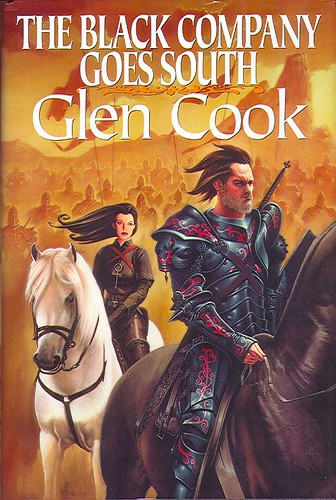
Croaker and The Lady, Glen Cook
***SPOILERS in this section***
Full disclosure, I have to admit my bias for this relationship as it is my favorite in all of fantasy. Croaker is the medic and keeper of the annals for The Black Company, a elite force of mercenaries that often hire their services out to the worst of the worst. The Lady is an all-powerful sorceress that rules over half the world, which she took from her husband, The Dominator. Slap these two together from book one, and you have one of the most unforgettable, awkwardly romantic, and organic relationships in one of fantasy' more under-appreciated works. The Lady is always in the seat of power next to our lowly medic, but these two develop an attraction that turns into friendship, and friendship into a love that lasts beyond the most difficult of travails. Yet what makes them work so well is that each is independent of the other, with one neither defining themselves on the basis of the other when it comes to their own self-worth. When Croaker is thought dead and gone from the result of a battle, The Lady steps up as the Company's new leader to take care of herself and the survivors, just like when Croaker finds out The Lady is potentially in huge trouble, he doesn't dash off to save her, knowing she has more than enough ability to handle herself. What makes these characters work so well together is their individual agency and how it interacts within the relationship. When they need each other, they are there, but when they can't be there, they don't just sit their thinking "Oh, what is he/she doing? What am I going to do? I MISS THEM SO MUCH I NEED THEM HERE RIGHT NOW!" It is a relationship that befits any strong couple: one of trust and honesty, not sycophantic reliance on one person.

They are a TEAM.

Now let's look at a

Relationship *without* Agency

Yep, I'm going there.
Once again, I am not bashing the film. In fact, I love this movie! But this movie features a romantic duo that is the exact opposite of Croaker and The Lady. Buttercup, from the get-go, is a blonde Maid Marian, meant to stand there, pout, look pretty, and smile and kiss Wesley on cue. Now, I know what many are going to say: That was the point. The entire movie/novel is meant to satirize the princess genre completely, but they do it so well that it popped into my mind pretty much immediately. Buttercup's entire world is built on two things: 1. I love Wesley and 2. Is Wesley coming for me? Every action she has is at the behest of him, but let's not let Wesley off the hook, either. His entire character  is about finding Buttercup and literally giving her whatever she wants, no questions asked, so everything I can say about her should be applied to him as well.

Like Lady and Croaker, who are a TEAM, this is DEPENDENCY.

And there is a crux of writing a Romantic Relationship with Agency involved:

TEAM vs. DEPENDENCY

Here is an easy guide to know the difference:

Does your romantic relationship feature two characters working in team, who make independent decisions for themselves outside of the relationship and can still be in a relationship?

Then YES, they have agency.

Does your romantic relationship feature two characters where one is dependent on the other for everything, who's role and function is dependent on serving the other person's story line or identity?

Then NO, they do not have agency.

It is pretty simple when you get down to it, but again, just because a character or a pair of characters do not possess agency doesn't mean they are automatically bad. Sansa Stark from Game of Thrones is distinct for the fact that she has no agency but is still compelling as a viewing glass into the workings of Westeros. She is our witness. As is Gollum from Lord of the Rings, who is meant to represent the corruption the One Ring brings upon all those who wear it. As with everything in writing, it all comes down to how your write it. Be thoughtful about what and who are you putting the page, and put real thought into how you want them represented. You will never please everyone, but a well-written character will always please more people than not.

Thanks for dropping by! If you liked what you read here, please click on the G+1 button the left side of the screen, or follow me on Twitter @JayRequard. Both help me grow the readership for this blog, and any help would be, well, helpful!

Friday, March 15, 2013

Dealing with Critiques and Rejection

Now some people are probably doing a double-take when they read this opening statement, as it goes against many natural inclinations we as writers and human beings have.

Bear with me:

Critique and rejection are two of the greatest things that can happen to a writer, but they are only good for a writer if the writer themselves can see critiques and rejections for what they are: the chance to learn.

Nobody in the publishing business does it on their own, and nobody becomes a great writer by themselves. Writing fiction, in its most pure essence, is creating something new and beautiful from one's experiences, hopes, dreams, nightmares, as well as our lowest and highest natures. The type of writing a person does on a creative level defines them in all ways--therefore it makes total sense that having a your work critiqued as anything less than *perfect* or having that work rejected by a publisher hurts. To those with the wrong mindset, such a judgment or rejection isn't just about your characters or your story--it's about you as a person.

But, my friends, it is good to be rejected as a writer.

Rejection, especially from a good editor, is more affirming of where you need to go with your writing than it is about how developed you are or aren't as a writer.

Case in point: I am currently working on a story that was entitled Shallow Bay, which has now been reworked into the The Beast of Shallow Bay. This fantasy epic tells the tale of an old pirate named Ngala who sets sail upon The Mirror Sea on the quest for riches and rapine. On the way back from a successful raid, his ship The Lion is mysteriously trapped in the middle of Shallow Bay, with its deserted coast and the brooding jungles beyond the white sand shore. Trapped without fresh food, water, and harangued by the monsters of the deep, Ngala and crew must solve the mystery of their entrapment before it is too late.

This story was rejected five times, each by a SFWA pro-market. And yes, it hurt. I won't lie and say that I am not immune to being told that I was lacking, but when I finally got through that one-hour "moody"-period I always go through, I sat back down and really looked at the comments given to me. Out of all the people who rejected it, Beneath Ceaseless Skies, edited by the talented Scott H. Andrews, gave me the reasons why it was rejected.

First, the fact that I got a personalized rejection that was not a form letter was a big deal to me, because BCS could have just sent me a form letter and that would have been it. Instead, they told me what the problems were with the story.

And they were right on about everything they said.

I went back and found the section where there were pronoun errors, which my critiquers had missed, my first reader had missed, and more importantly, I had missed. In the end, the fault lay squarely upon me. So I sat on it a couple of months, and now I am editing to send back out. I can't send it to Beneath Ceaseless Skies again, but that publication will be one of the big reasons for why it gets picked up when it gets picked up for publication.

What those who are not as savvy to publishing have to understand--a lot of these publishers and magazines don't have a lot of money, so the spots that they can give out in their publications are limited, and believe it or not they do receive a lot of good stories. This forces them to have to look at every single detail and mistake and weigh it against other submissions, a process that is completely out of the hands of those submitting to them. It is part of the learning process of trying to get into this business and produce great fiction.

It is understandable to be angry when your work is rejected, but a real writer can't let that anger stop them from moving on and trying again. It may be an old axiom, but the ones who make it in publishing are the ones who try, try, try, and try again. Rowling was rejected hundreds of times before Harry Potter was published. George R.R. Martin was rejected 45 times before he even sold his first short story.

Don't give up. Toughen that "author's skin", remove yourself from the emotional side of it, and learn how to sit down and pick your work apart so it can become better.

This somewhat segue-ways into the area of critiques. Critiques aren't rejections, but in some cases they can feel as damaging to a writer as if they were actual rejections. This fact is compounded by the reality that quality critiques are hard to receive because depending on who you are working with the people around you may not have a good grasp of your genre or they may be starting out on their journey as a writer and really don't know a lot about writing fiction.

Sometimes it is hard to know which critiques are good for your work and which ones are might not apply. However, we can pay some attention to what makes a good critiquer over a good critique. Here are the seven aspects I look for in a good critiquer.

What Makes A Good Critiquer


1. A good critiquer is reader who reads your work critically and makes constructive suggestions to make the piece better while at the same time respecting the fact that it is your work.

2. A good critiquer does not try to rewrite or redefine your work to suit their tastes, as it is your work and not theirs.

3. A good critiquer comes prepared to critique.

4. A good critiquer remains professional and treats what they are doing as a job. Remember, the goal is to get your work ready to be published, and publishing is a business.

5. A critiquer never talks poorly of other writers or refuses to critique based on their opinion of other's skills. A critiquer is there to learn and to help others learn the Craft of Writing, and should come into a critique session with a positive and helpful attitude.

6. A good critiquer is constantly trying to improve their own skills as a writer, editor, and reader.

It goes without saying that not all critiques are equal in value, so therefore it is the job of the person being critiqued to unpack all of the opinions they are given and decide which ones provide the most value for getting their work toward publication. This takes a lot of time working in dedicated critique groups, building an honest rapport with its members, which sometimes means swallowing your ego and taking the time to listen to what your peers are saying.

In closing I would like to add one final reminder: sometimes hearing a "no" in publishing is the first step to hearing a "yes" that lets you into the industry. Try, try, and try again, my friends, and one day that "yes" will come.

If you enjoyed this blog article please do me the kind service of pressing on the "G+1" button at the top right of the screen, or follow me on Twitter @JayRequard. Thanks for visiting!